Supplements vs. the Dentist's Chair: Where Each One Actually Fits
An honest breakdown of what a daily oral supplement can realistically add to your routine, and what it was never designed to replace.
It's a fair question, and one worth asking honestly rather than answering with marketing language: if you're taking a daily oral health supplement, does that change how often you need to see a dentist, or what a dentist can catch that a supplement can't? The honest answer requires separating what supplements are actually designed to do from what they were never meant to touch.
What a well-formulated oral supplement can reasonably do
Based on the categories of ingredients typically involved — probiotic strains, minerals, and supporting botanicals — the realistic scope is: supporting a more favorable oral bacterial balance, contributing supporting nutrients for enamel structure, and improving breath freshness through both mechanical (mint) and bacterial (probiotic) mechanisms. These are genuine, if generally modest, contributions to overall oral wellness alongside good hygiene habits.
What no supplement can do
Detect a cavity
Cavities often develop without any noticeable sensation until they're fairly advanced. X-rays and a dentist's direct examination are the only reliable way to catch decay early, particularly between teeth where it's not visible.
Remove existing plaque and tartar
Once plaque hardens into tartar, it can only be removed with professional dental instruments — no amount of brushing, rinsing, or supplementing dissolves it once it's calcified onto the tooth surface.
Diagnose gum disease progression
A dentist or hygienist measures the depth of the pockets between your gums and teeth with a small probe — this is the actual diagnostic method for determining how advanced gum disease is, and it's not something you or a supplement can assess.
Fix structural problems
Cracked teeth, misalignment, worn fillings, and similar structural issues require direct dental intervention. No ingredient list changes that.
Where the two actually complement each other
Think of it less as "supplement or dentist" and more as two different layers of oral care operating on different timescales:
| Layer | What it covers |
|---|---|
| Daily habits + supplement | Ongoing bacterial balance, breath, and supporting nutrients — ongoing, cumulative, gradual |
| Regular dental visits | Detection, diagnosis, professional cleaning, and treatment of anything daily habits can't address — periodic, precise, and diagnostic |
A supplement working exactly as intended still can't tell you whether a specific tooth has a cavity forming, or whether a particular gum pocket has deepened since your last visit. Those are inherently things that need direct examination.
A reasonable way to think about it
If you're already brushing, flossing, and seeing a dentist regularly, adding an evidence-informed oral probiotic is a reasonable, low-risk addition that might meaningfully help with breath and gum comfort, based on the strain-specific research covered in our ingredient breakdown. What it shouldn't become is a reason to skip or delay dental visits — the two aren't substitutes, and treating them as such is the one genuinely risky way to approach this category of product.
Related to this article
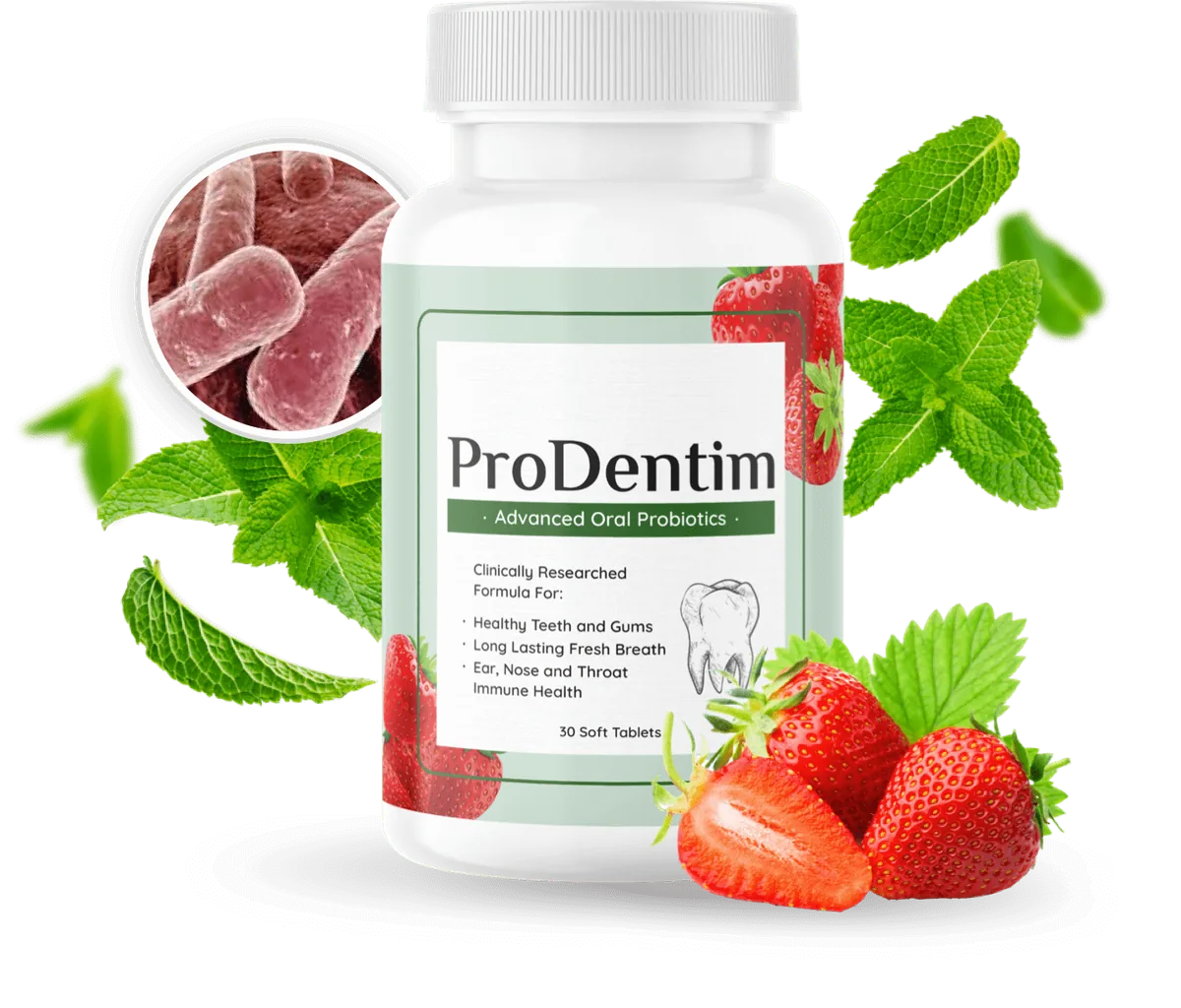
ProDentim's probiotic formula is discussed throughout this guide. See the full ingredient breakdown or current pricing to learn more.
No. Supplements can support bacterial balance and breath, but only a dentist can detect cavities, measure gum pocket depth, and remove hardened tartar.
It can be a reasonable, low-risk addition to an already-good routine, particularly for breath and gum comfort, though results vary by individual and it works alongside — not instead of — brushing, flossing, and dental visits.
No. Once decay has started, only a dentist can address it — no supplement, toothpaste, or home routine reverses an existing cavity.
Curious how ProDentim fits into this?
See the full ingredient breakdown and current pricing before you decide.
Check Current Price →